

Menu
Close
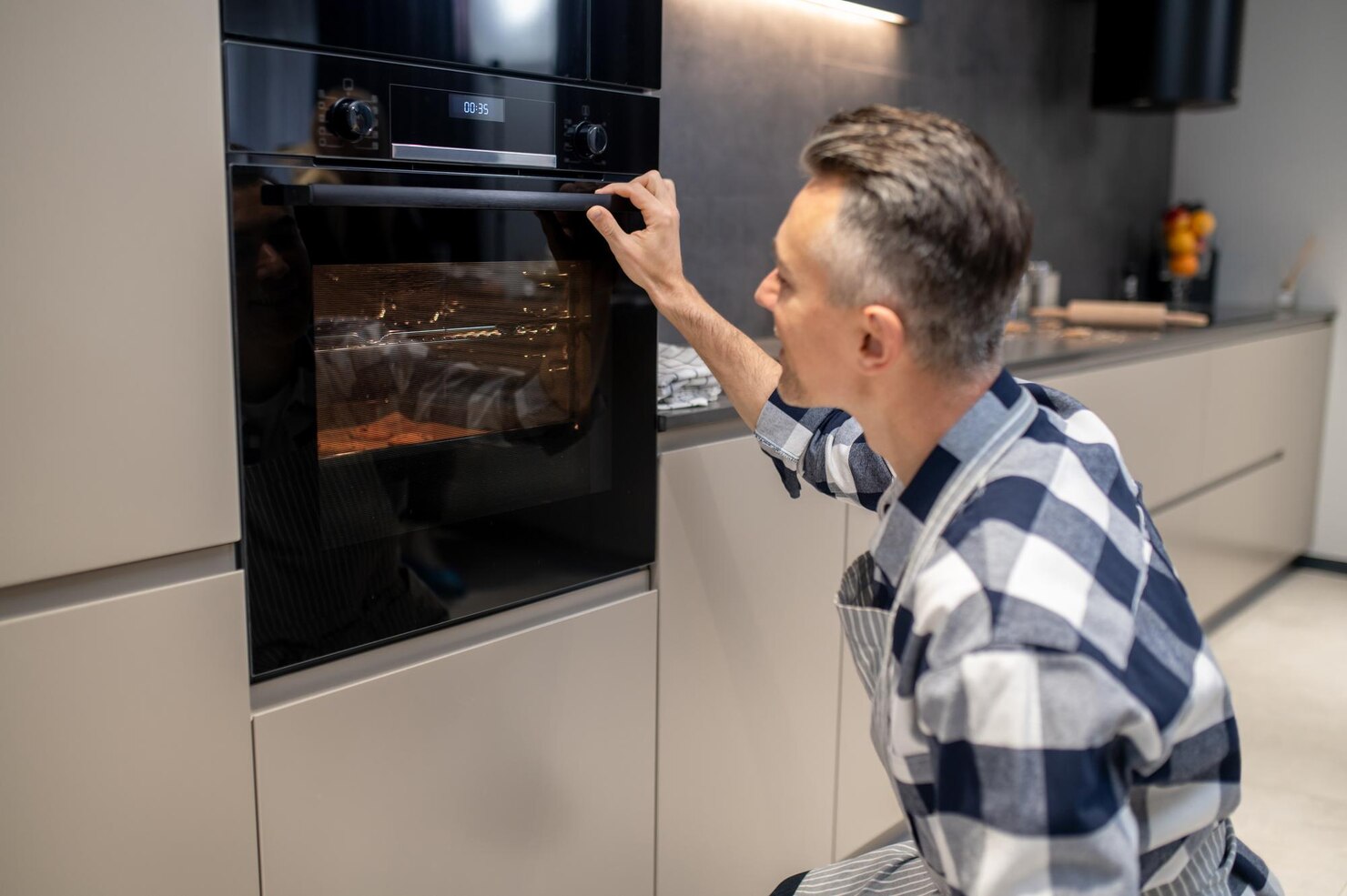
Find out why your oven runs too hot, stays too cool, or cooks unevenly—and what you can check.
Your oven may heat to the wrong temperature because of incorrect settings, heat loss, a calibration issue, or a faulty part. Common faults involve the temperature sensor, heating element, or gas ignition system.
Start by checking the cooking mode, temperature units, and door closure. Then follow your owner’s manual to assess baking performance.
If food still burns or takes too long to cook, your oven may need professional attention. Here is how to narrow down the problem.
Some temperature changes are normal. Gas and electric ovens cycle their heat on and off to maintain an average temperature.
This means the temperature inside the oven can rise above and fall below your selected setting. One thermometer reading may catch either point in that cycle. It does not always show a fault.
Look for a repeated pattern instead. Cakes that regularly burn, meals that stay undercooked, or longer cooking times deserve a closer check.
Check the settings and cooking conditions first. These simple steps may explain poor results without a component fault.
Make sure you select bake rather than broil or warming mode. Check whether the display uses Celsius or Fahrenheit.
Convection settings also matter. Some ovens automatically reduce the selected temperature during convection cooking. Check your manual before making another adjustment.
Follow your model’s preheating instructions before loading food. Putting a cake into a cold oven can change how it rises and cooks.
Preheating time varies with the oven, starting temperature, and selected setting.
Use the rack position recommended in your manual or recipe. Leave space around trays so hot air can move.
Dark pans may brown food faster than light metal pans. Crowded racks, oversized trays, and blocked vents can also affect results.
Once the oven is cool, check for trays or racks blocking the door. Look for visible damage to the door gasket.
Avoid opening the door often during cooking. Each opening lets heat escape. Manufacturers identify cookware, airflow, preheating, and door openings as factors in baking performance.
Persistent temperature problems may come from a control, heating, or heat-retention fault.
Calibration adjusts the oven’s temperature offset. It may help when cooking results are consistently too hot or too cold.
It cannot repair a failed component or explain every case of uneven baking.
The sensor or thermostat helps regulate oven heat. A fault can cause the oven to stop heating too soon or continue heating too long.
The part and testing method depend on the model.
Electric ovens use heating elements to produce heat. A failed bake element may cause slow heating or poor baking, even if the broiler still works.
Do not remove panels or touch elements to test them.
A gas oven with an ignition fault may heat slowly or fail to maintain temperature. Delayed ignition needs professional assessment.
Leave igniter, burner, and gas-valve checks to a qualified technician.
A worn door seal or hinge problem may let heat escape. A convection fan fault may affect heat distribution.
Control boards, relays, wiring, and power supply faults are other possible causes.
Start with the bake-performance test in your owner’s manual. Use the recommended rack position, cooking mode, and cookware.
Record the results across more than one use. Note whether food cooks too slowly, browns unevenly, or burns.
Follow your manufacturer’s advice before using an oven thermometer. Placement, response time, and door openings can affect its reading.
Some manufacturers recommend a baking test before relying on a thermometer. Avoid changing calibration based on one reading.
Write down any error codes, affected cooking modes, and recent changes. These details can help a technician diagnose the problem.
Calibration may help with a consistent temperature offset. It is less likely to solve unpredictable heating, failed preheating, or a damaged heating component.
Follow the instructions for your exact model. Button sequences and adjustment limits differ between ovens.
Make only the adjustments your manual allows. If the problem continues, arrange a repair assessment instead of repeatedly changing the setting.
The symptom can guide the next check, but it cannot confirm which part has failed.
| Symptom | Possible areas to check |
| Oven stays too cool | Settings, preheating, door closure, calibration, heating components |
| Oven runs too hot | Settings, calibration, sensor, thermostat, controls |
| Slow preheating | Heating components, gas ignition, power supply |
| Uneven cooking | Rack position, cookware, airflow, convection fan |
| Broil works but bake performs poorly | Bake heating components or controls |
| Unpredictable temperature changes | Sensor, wiring, relays, control system |
Call a technician when basic checks do not improve cooking results. Repeated error codes, breaker trips, and visible component damage also need attention.
Stop using the oven if it overheats uncontrollably, sparks, or produces a burning electrical smell.
If you smell gas, leave the area. Avoid flames, electrical switches, and using a phone inside. Contact your gas emergency service from a safe location.
AMP Appliance provides oven repair services in Surrey, BC. When you call, share the model number, symptoms, and any error codes.
A repair assessment helps identify whether the issue involves settings, heat loss, or a faulty part. Ask about the findings, recommended work, and checks needed after repair.
For a freestanding appliance with oven and cooktop problems, ask about our range and cooker repair services.
Good cooking habits help reduce avoidable temperature problems:
If your oven still runs too hot or too cold, contact AMP Appliance. We are a licensed and insured appliance repair company serving Surrey and the surrounding areas.
Call +1 (778) 834-7026 or visit AMP Appliance to discuss your oven heating problem.
As certified technicians, we repair all major appliance brands. Whether it’s Samsung, LG, Whirlpool, GE, or Bosch, we can fix your appliance.