

Menu
Close
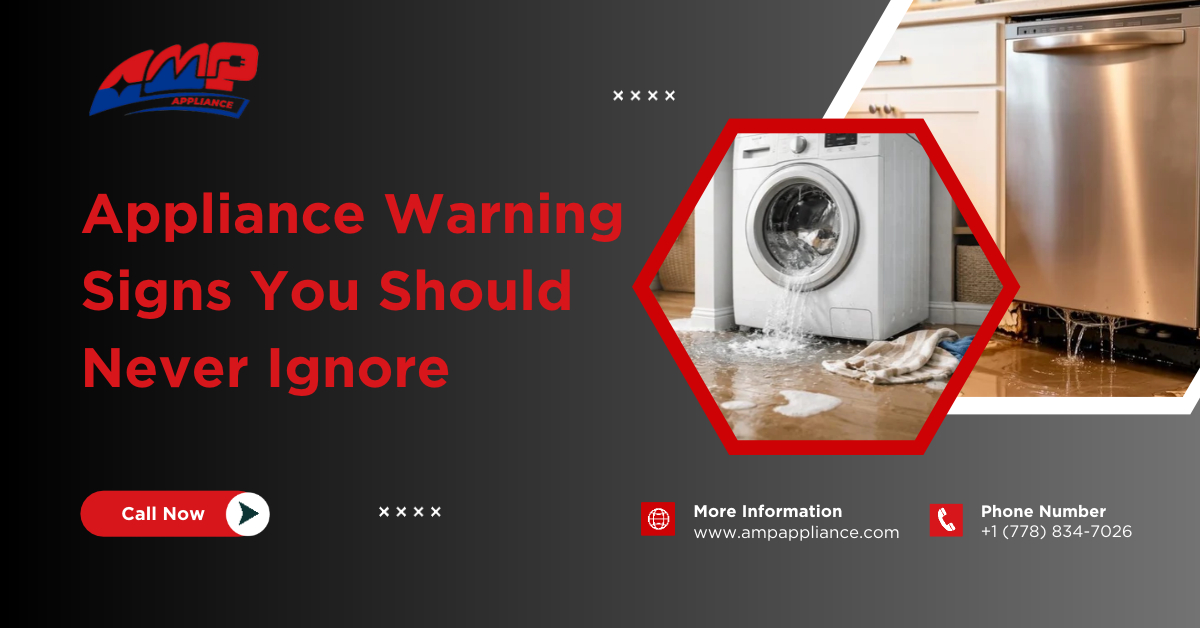
Spot problems early, know when to stop using an appliance, and get the right help.
Burning smells, water leaks, strange noises, and poor performance can signal an appliance problem. Some faults need a repair visit. Others, such as suspected gas leaks or smoke, need immediate action.
You do not need to know which part has failed. Noticing a change and responding early is what matters.
This guide explains the warning signs to watch for, what they may mean, and when to seek appliance repair.
Gas odors, carbon monoxide alarms, smoke, and electrical shocks require urgent attention. Put your safety first before checking the appliance.
A rotten egg smell may indicate a natural gas leak. Hissing near a gas appliance can also be a warning.
Leave the building. Do not use electrical switches, unplug appliances, or use your phone inside. Once outside, call Fortis BC at 1-800-663-9911 or 911. Stay outside until you are told it is safe to return.
Carbon monoxide has no smell. You cannot rely on your senses to detect it.
If your CO alarm sounds, get everyone, including pets, outside immediately. Call 911 from outside. Do not search for the source or return until emergency responders confirm it is safe.
Smoke, scorched plugs, hot outlets, and shocks can point to electrical danger. The fault may involve the appliance or household wiring. Stop using the equipment and seek professional help. For an active fire, get outside and call 911.
New or worsening symptoms deserve attention, even when the appliance still works. The signs below can help you describe the problem to a technician.
A new noise may come from worn bearings, loose parts, or a trapped object. A washer that bangs may also have an uneven load.
Note when the noise happens. Does it start during spinning, draining, or heating? This detail helps narrow down the cause.
Water under a washer, dishwasher, refrigerator, or coffee machine needs checking. Possible causes include damaged hoses, worn seals, blocked drains, or pump faults.
Keep away from water near plugs or electrical parts. Avoid running another cycle just to see whether the leak returns.
A warm refrigerator, slow oven, or dryer that leaves clothes damp may have a developing fault.
Check the selected settings and any user checks listed in the manual. If performance stays poor, arrange an inspection.
An appliance that repeatedly trips a breaker needs assessment. Avoid resetting the breaker again and again.
The cause could involve the appliance, circuit, or wiring. An appliance technician or qualified electrician can help identify the fault.
An error code gives useful information, but its meaning depends on the model. Record the code before contacting a repair company.
Check the owner’s manual for guidance. Repeated resets may clear the display without fixing the underlying problem.
A refrigerator that rarely stops or a dryer that needs extra cycles may be losing efficiency.
Higher energy bills alone do not prove an appliance fault. Look for other changes, such as weak cooling, longer drying times, or unusual heat.
Each appliance has its own signs of trouble. Watch for changes from its normal operation.
| Appliance | Warning signs |
| Refrigerator | Weak cooling, heavy frost, leaks, or frequent clicking |
| Washing machine | Violent shaking, poor draining, leaks, or failure to spin |
| Dishwasher | Standing water, recurring leaks, or poor cleaning |
| Oven | Uneven cooking, slow heating, or unreliable temperatures |
| Dryer | Long drying times, unusual heat, or loud drum noises |
| Coffee machine | Weak water flow, leaks, or poor heating |
| Range or cooker | Ignition faults, unreliable burners, or damaged controls |
For example, standing water may call for dishwasher repair. A fridge that no longer keeps food cold needs prompt refrigerator repair and attention to safe food storage.
Choose your next step based on the symptom and its urgency.
Do not remove electrical covers, bypass door switches, or attempt gas repairs. Avoid touching damaged plugs or moving heavy appliances to investigate a fault.
The best choice depends on the fault, repair cost, age, and overall condition.
A repair may make sense when the appliance has one faulty part and otherwise works well. Replacement may deserve consideration when breakdowns keep returning or suitable parts are unavailable.
Compare the full costs. A replacement can involve delivery, installation, and removal of the old unit.
Check the warranty before approving work. A diagnosis gives you a clearer basis for deciding whether an old appliance is worth repairing.
Regular care can help you spot wear and maintain performance. Follow the instructions for your model.
Routine cleaning has limits. It will not repair damaged wiring, worn bearings, or a failed heating element. Book professional help when a symptom continues.
A clear repair process starts with the symptoms you have noticed.
Share the appliance type, model, error codes, and recent changes. Explain when the fault occurs and whether it happens every time.
Professional diagnosis helps identify the cause. Similar symptoms can come from different parts, so guessing may lead to unnecessary replacements.
Ask about the proposed work, parts availability, and expected cost. Use that information to decide how to proceed.
AMP Appliance is a licensed and fully insured appliance repair company serving Surrey and the surrounding areas.
Our services cover refrigerator, washer, dishwasher, oven, and dryer repair. We also provide coffee machine repair and range and cooker repair.
Whether you notice a leaking washer or an oven that heats unevenly, sharing the symptoms helps us understand your repair needs.
A new noise, recurring leak, or drop in performance is worth checking. Arrange an assessment before the problem disrupts more of your day.
Contact AMP Appliance at +1 (778) 834-7026 to discuss appliance repair in Surrey, BC.
For gas leaks, fire, or a sounding CO alarm, follow emergency guidance first.
As certified technicians, we repair all major appliance brands. Whether it’s Samsung, LG, Whirlpool, GE, or Bosch, we can fix your appliance.